Research Scientist · University of Oklahoma

Advancing AI research. Engineering real-world solutions.

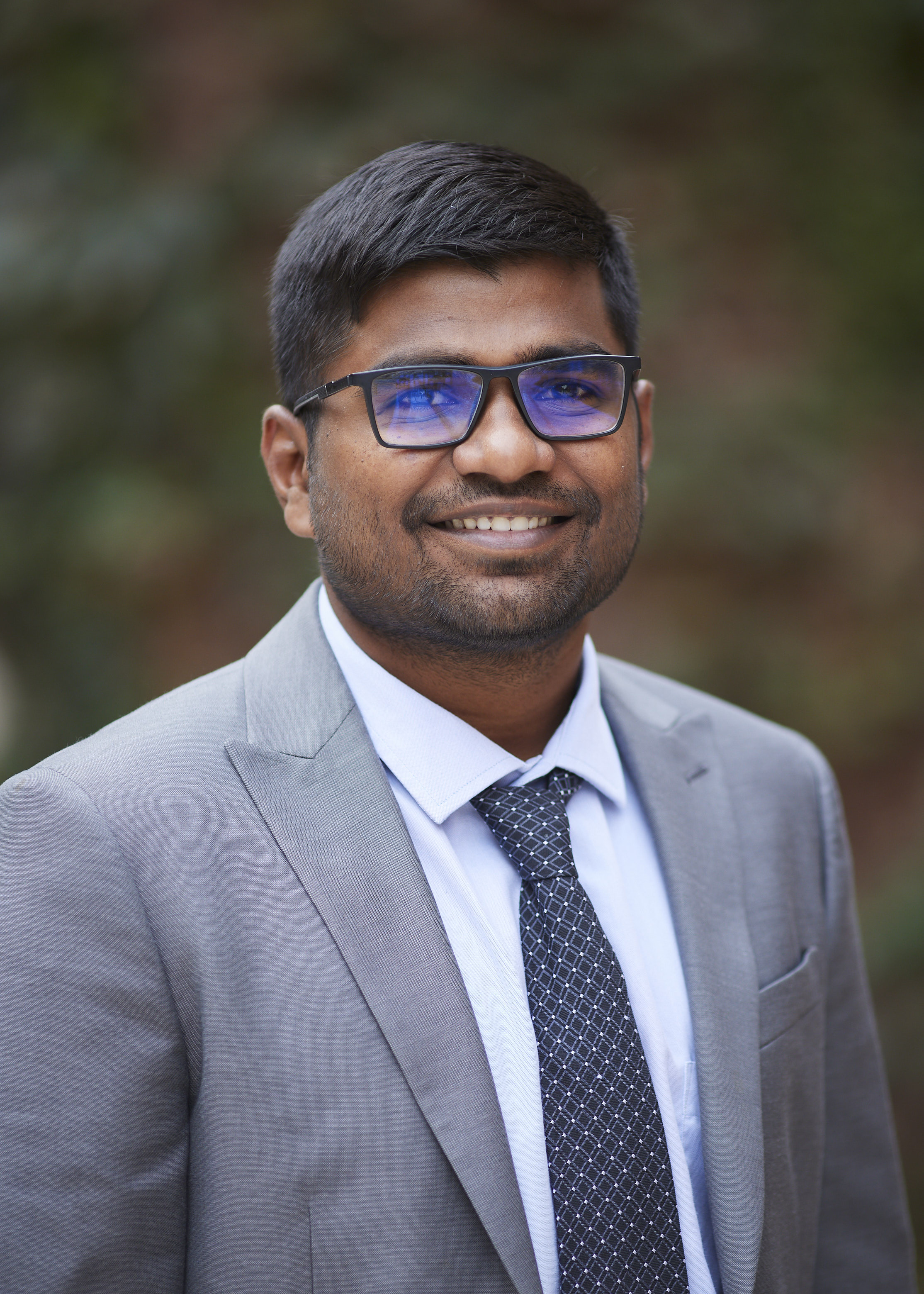
I'm Dr. Sai Kiran Maryada, a Research Scientist at the Data Institute for Societal Challenges (DISC). My work runs from deep learning for medical and subsurface imaging to full-stack dashboards used by public-health and research partners across Oklahoma.

Sai Kiran Maryada
Gallogly College of Engineering
Data Institute for Societal Challenges
01

Healthcare AI

  • Clinical decision support & workflow optimization
  • Medical image segmentation & diagnosis — CT, MRI, retinal, mammography
  • Explainable & trustworthy AI for diagnostic interpretation
  • Risk prediction & patient outcome modeling
  • Human-centered visual analytics for clinicians
02

Energy & Subsurface Analytics

  • Subsurface characterization & reservoir property estimation
  • Imaging-based rock mechanics & mineralogical feature extraction
  • Petrographic & SEM-based segmentation / classification
  • ML workflows for geological & geoscience data interpretation
  • Predictive modeling of multi-phase physical systems

From model to platform

Full stack

Most research stops at the paper. I carry it through to software people sign in to — the data work, the models, and the interfaces that put results in front of decision-makers.

  1. 01

    Data

    Integrating clinical, imaging, geospatial, and community data into pipelines that are ready for analysis.

    • Python
    • Data pipelines
    • Geospatial data
  2. 02

    Models

    Deep learning and image analysis for diagnosis, prognosis, and rock-property estimation.

    • CNNs · ResNet
    • Vision Transformers
    • Self-supervised learning
    • Radiomics
  3. 03

    Applications

    Secure web apps with role-based access, review workflows, and controlled export.

    • React
    • Vite
    • React Router
    • Streamlit
  4. 04

    Visual analytics

    Interactive charts and maps that turn model output into decisions.

    • Plotly
    • D3
    • Mapbox
    • Recharts

Active projects

4 live platforms
Life Science Oklahoma · EDA Build Back Better · 2025–2027

LSOK Site Mining Registry

A statewide registry of Oklahoma life-science researchers, core services, and equipment — with role-based access, review workflows, analytics, and controlled export.

Visit LSOK ↗
DISC · Research development

DISC Funding Intelligence

A platform that helps OU researchers discover and track funding opportunities aligned with their expertise.

Open platform ↗
TSET Health Promotion Research Center · FY27 Seed Grant

SHAPE OK — SNAP Dashboard

An interactive dashboard exploring SNAP participation and food-assistance indicators across Oklahoma communities.

Open dashboard ↗

About

I received my Ph.D. in Computer Science and M.S. in Data Science and Analytics from the University of Oklahoma. My doctoral research introduced deep learning and multi-stage image analysis algorithms for retinal screening, breast lesion classification, ischemic stroke prognosis, and computer-aided detection — improving predictive accuracy and interpretability in real clinical research studies.

I've contributed to NSF- and NIH-funded initiatives and published in SPIE Medical Imaging, IEEE Transactions on Biomedical Engineering, and Geoenergy Science and Engineering. My work spans computer vision, predictive modeling, explainable AI, human–computer teaming, and large-scale data pipelines.

Alongside research, I design and build full-stack web platforms — React front ends, interactive Plotly, D3, and Mapbox visualizations, and secure role-based workflows — so that models leave the lab and reach the people who make decisions.

2022 Dissertation Excellence AwardOU Gallogly College of Engineering →
Recent publications

All publications →
Nov 2025 Conference

Deep Learning-Based Estimation of Petrophysical Properties for Unconventional Shales from SEM Images

ADIPEC — Abu Dhabi International Petroleum Exhibition and Conference
L. Livingstone, P. Yeturi, I. Cherukuri, D. Devegowda, M. Curtis, C. Rai, S.K. Maryada

A deep learning workflow that rapidly estimates petrophysical properties in unconventional shales directly from SEM images. Using 8,000+ images from 22 shale plays, a ResNet50-based classifier learns microstructural differences; its feature embeddings are then related to porosity, mineralogy, and elastic properties — avoiding segmentation workflows that can take weeks per image.

Jun 2025 Journal · Q1

An Improved Data-Driven Method for the Prediction of Elastic Properties in Unconventional Shales from SEM Images

Geoenergy Science and Engineering, Article 214043
S.K. Maryada, D. Devegowda, C. Rai, M. Curtis, D. Ebert, G. Danala

A fast, image-based workflow to estimate Young’s modulus from SEM images of drill cuttings across 14 shale plays. Textural and shape-based features are combined with deep learning representations and correlated with measured elastic properties via non-parametric regression, yielding strong predictive capability that holds on previously unseen images.

Jun 2025 Conference

Self-Supervised Learning Using Vision Transformer Architecture for Rock Image Segmentation

SPE Europec @ EAGE Conference and Exhibition
R.D. Mohammad, D. Devegowda, C. Rai, M. Curtis, S. Mudduluru, S.K. Maryada

A self-supervised ViT-based segmentation workflow for FIB-SEM shale images that removes the need for pixel-level labels. The model segments images into 12 sub-classes grouped into organic, inorganic, and pore space, performing robustly across 22 shale plays and significantly accelerating shale characterization.